Trying to choose between a classic six and a junior four on the Upper West Side can feel like comparing apples to oranges. You want enough space, good flow, and a layout that can evolve without turning your life into a construction site. This guide breaks down what each term really means, how they live day to day, and the approval and renovation realities that matter in UWS co-ops and condos. By the end, you’ll have a clear checklist to help you shortlist the right buildings and units. Let’s dive in.
What these terms actually mean
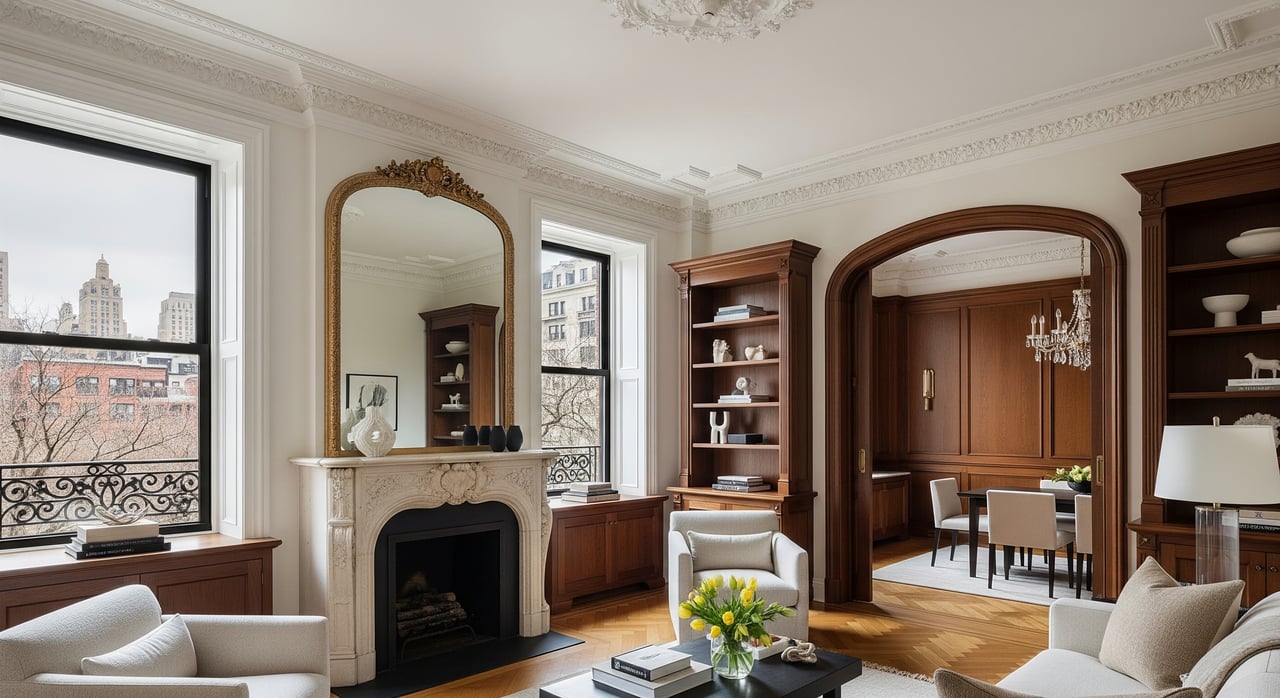
A classic six is a prewar apartment with six primary rooms, typically a foyer, living room, formal dining room, separate kitchen, two full bedrooms, and a smaller maid’s room near the kitchen. Bathrooms and closets are not counted. On the UWS, the maid’s room often becomes an office, nursery, or small bedroom.
A junior four is a smaller layout with a living room, a dining area or dining alcove, one full bedroom, and an additional small room or alcove that can work as a den, office, or small bedroom. Terms like “junior four” and “JR4” are not standardized and vary by building.
Important note: These are informal, marketing terms. Always confirm legal bedroom counts, room sizes, and square footage on the actual floor plan and with building management.
Typical sizes and how they live
Classic six at a glance
- Approximate size: often 1,400 to 1,900 square feet on the UWS, with some smaller or larger outliers.
- Living experience: formal entry leads to living room and separate dining room, with bedrooms down a private corridor. The maid’s room near the kitchen offers bonus utility.
- Strengths: clear separation between entertaining spaces and bedrooms, more rooms for flexible use, potential cross-ventilation.
- Limitations: original kitchens and baths can be compact, circulation can feel compartmentalized, and maintenance and carrying costs are often higher.
Junior four at a glance
- Approximate size: often 800 to 1,050 square feet on the UWS, with a broader range of 700 to 1,200 square feet.
- Living experience: a compact plan with a living room and dining alcove or small dining room, one full bedroom, plus a small room or alcove for an office or nursery.
- Strengths: efficient square footage, lower carrying costs, easier to maintain and condition.
- Limitations: fewer true bedrooms, smaller closets, less privacy between living and sleeping zones unless reconfigured.
Room flow, light, and storage on the UWS
Room flow
Classic six layouts feature a formal sequence from foyer to living and dining rooms, with a separate bedroom wing. This separation supports entertaining and quiet sleeping areas. Junior fours place most living functions off the main room, which saves space but reduces separation.
Natural light and orientation
Classic six units often sit on corner or through lines, which can mean more windows and cross-breezes. Junior fours are more often single-exposure, sometimes facing courtyards. Always check orientation, exposure count, and window placement.
Storage and privacy
Classic six apartments usually offer more closets, built-ins, and pantries, and some buildings provide basement storage. Junior fours tend to have fewer closets. If storage matters, verify closet count and ask about building storage options.
Where you find them on the Upper West Side
The UWS is rich in prewar co-ops across Central Park West, Riverside Drive, West End Avenue, and the blocks between Broadway and Amsterdam. Many retain original room sequences, high ceilings, and plaster details that shape renovation choices.
- Large prewar co-op houses: more likely to offer classic six and larger plans with formal flow and bigger windows.
- Mid-block brownstone-style walk-ups and smaller prewar co-ops: more junior fours and smaller classics, often with fewer amenities.
- Newer condos and postwar buildings: commonly deliver modern two-bedrooms rather than classic sixes, and can be a good fit if you want newer kitchens and baths with fewer renovation needs.
Renovation and approvals: what to expect
Renovation goals often include opening the kitchen, creating an en-suite bath, or converting the maid’s room into an office or nursery. In co-ops, expect a formal approval process with plans, licensed contractors, insurance, deposits, and building-super coordination. Some co-ops limit structural changes, HVAC upgrades, or washer/dryer installations.
Condos generally allow more flexibility than co-ops, though building rules still apply. Parts of the UWS sit within historic districts or include landmarked buildings, which can affect windows or exterior elements. If you are considering a major renovation, review building rules early.
Costs vary by scope. A full prewar gut with new kitchens, baths, mechanicals, and reconfigured walls can run from the tens of thousands into the low hundreds of thousands. Moving plumbing and venting, structural work, and custom millwork drive costs. Plan a contingency and engage an architect or contractor to review feasibility before making offers.
Co-op vs. condo: ownership factors
Many UWS prewar properties are co-ops, which come with board approvals for purchases and renovations, limits on subletting, and clear building rules. Condos offer more flexibility for renovations and leasing but are less common in older prewar buildings.
For financing and carrying costs, larger classic six units can require stronger financials and larger down payments. Maintenance can be higher in larger apartments. Review building financials and any recent or upcoming capital assessments so you can compare apples to apples.
Resale can differ by layout. Classic sixes often appeal to buyers who value prewar scale and separation of spaces. Junior fours turn over more frequently and may suit singles, couples, or smaller families who prioritize location and efficiency. As always, condition, configuration, and building quality drive outcomes.
Which layout fits your next 3–5 years
- Choose a classic six if you want two true bedrooms plus an additional small room, clear separation between public and private spaces, and more storage. It suits those planning to host, work from home, or grow into the space.
- Choose a junior four if you prefer efficient square footage, lower carrying costs, and a second small room for an office or nursery. It works well for smaller families or anyone choosing location and convenience over size.
A quick buyer checklist for tours
- Confirm legal bedrooms and whether any smaller room meets code for a bedroom.
- Measure bedrooms to ensure beds, cribs, desks, and dressers fit.
- Count closets and built-ins; ask about basement storage cages and bike rooms.
- Check window exposures and light at different times of day.
- Review kitchen size and circulation and whether opening the plan would require costly plumbing moves.
- Ask about in-unit laundry rules and any restrictions on HVAC or electrical upgrades.
- Clarify elevator access, stroller storage, amenity policies, pet rules, and subletting rules.
- Review building financials, maintenance or HOA charges, and recent assessments.
Final thoughts
Both layouts can work well on the Upper West Side. The right choice depends on how you live, how much separation you want between spaces, your storage needs, and your appetite for renovation and board processes. If you are weighing trade-offs, a structured walkthrough and a clear feasibility read on renovations can save you time and cost.
For discreet, research-led guidance on classic six and junior four options on the UWS, schedule a confidential consultation with Keren Ringler.
FAQs
What is a classic six in Manhattan?
- A classic six is a prewar layout with six principal rooms, typically a foyer, living room, formal dining room, separate kitchen, two bedrooms, and a smaller maid’s room.
How big is a junior four on the Upper West Side?
- Many junior fours fall in the 800 to 1,050 square foot range, with a broader band of roughly 700 to 1,200 square feet depending on the building.
Can a maid’s room count as a legal bedroom?
- It depends on size, window and egress, and building rules; confirm with the floor plan, local code, and building management.
Are classic six apartments better for families?
- Many families value the separation of living spaces and bedroom wings, plus the extra small room, though carrying costs and purchase complexity are typically higher.
How hard is it to open a prewar kitchen in a co-op?
- Often feasible, but moving plumbing and venting drives cost and requires board approval and licensed contractors; structural and mechanical limits can apply.
What renovation costs should I expect in a UWS prewar?
- Budgets vary by scope, but from the tens of thousands into the low hundreds of thousands is common for full upgrades; plan a contingency and verify feasibility early.